


By Huijue Group
A spare slot in a rectifier shelf can make a radio expansion look inexpensive. The project team sees room for another module and adds one line to the budget. The actual decision depends on how much additional qualified output the complete plant can deliver and what duty must remain supported when equipment is unavailable.
Module count becomes useful after the design specifies input conditions, output voltage, temperature and the protected operating state. Until those conditions are established, multiplying the number of modules by a catalogue rating can overstate what the expansion will receive.
Price the duty that will exist after the expansion
Start with the live load after the new radio is installed. Include the auxiliaries supplied through the same DC boundary. Then identify the recovery duty, such as battery charging after an outage, and whether it must continue during the project’s selected module-loss state.
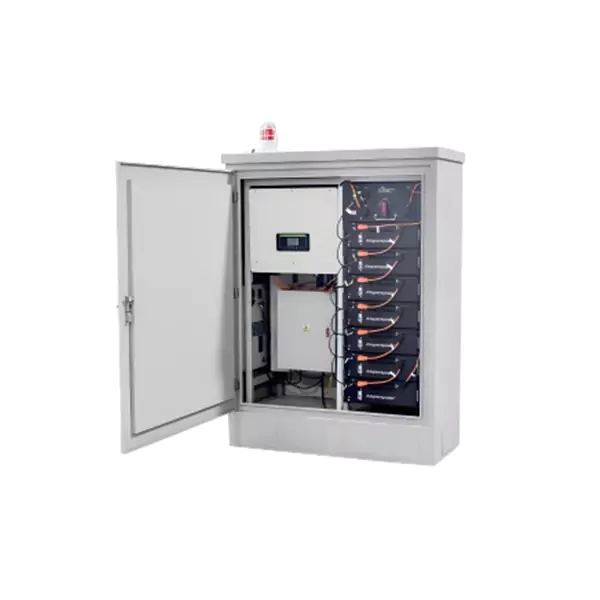
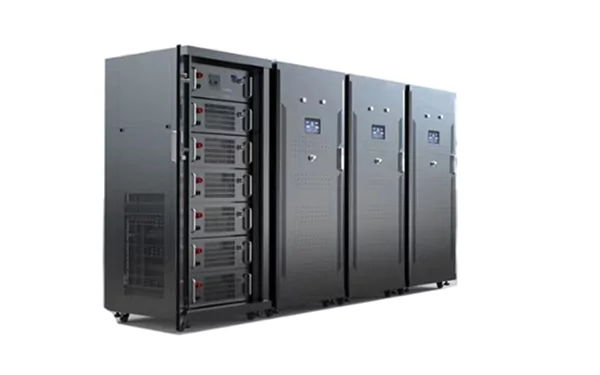
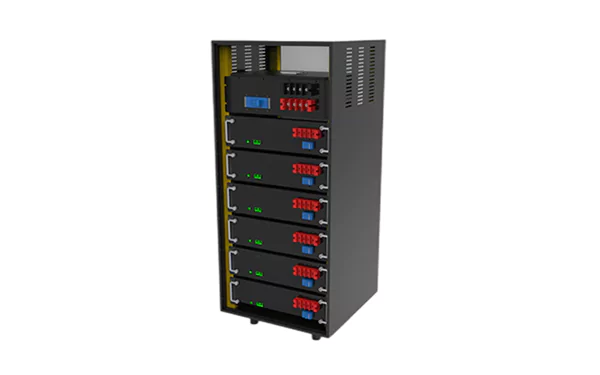
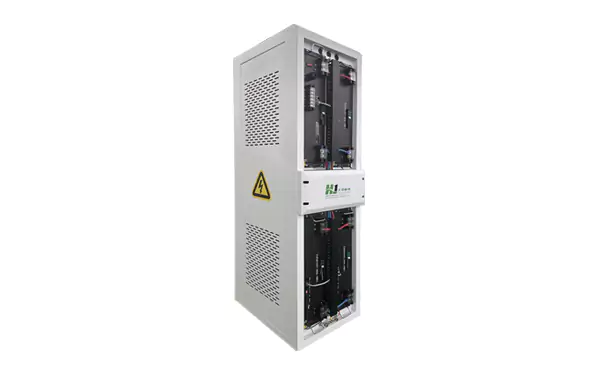
The equipment map also matters. A guide to telecom rectifier modules within the wider plant can help buyers distinguish plug-in converters from the shelf, controller, battery interface and DC distribution. Huijue Group's system explanation provides that context before a module purchase is treated as a complete capacity upgrade.
Review the shelf’s supported module types and revisions. An available position contributes capacity only after its AC feed, connector, busbar, thermal path and controller support have been established. A module can be mechanically insertable while its intended operation still requires approval for that shelf.
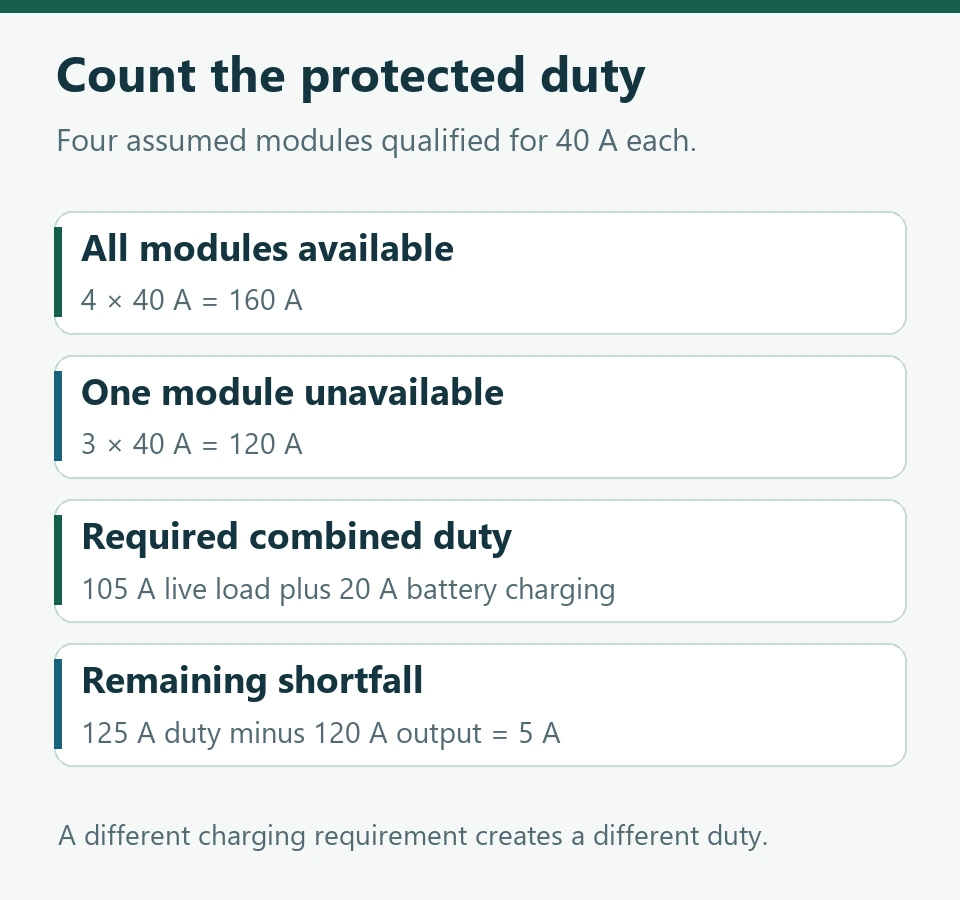
The example counts qualified current at the same DC operating point. Shared shelf and AC-source limits require separate checks.
Four modules can still miss the specified duty
Assume four compatible modules, each qualified for 40 A continuously at the chosen bus voltage and site conditions. The new live load is 105 A. The project also requires 20 A of permitted charging during a one-module-out condition. All values are invented design inputs.
The combined duty is 125 A. With all four modules available, 160 A of qualified module output exceeds that duty. With one module unavailable, only 120 A remains. The plant misses the declared protected duty by 5 A.
If the project permits charging to be suspended during that failure state, the remaining 120 A can cover the assumed 105 A live load, with 15 A of current margin. That is a different operating requirement. Document how reserve recovery will be handled while the fault persists and how the next outage is covered.
Follow the added power back to the AC source
An extra converter draws input power from an upstream circuit. Its breaker, conductor, phase allocation and backup source need to support the intended combined output. Losing one AC phase may remove several modules at once if they share that phase. The expected outage state should reflect that connection.
Heat is another consequence of additional conversion. More installed capacity may operate at a lower average load, while the increased radio demand raises cabinet heat elsewhere. Compare the module inlet temperature used for its qualified rating with what the cabinet can maintain after the expansion.
ITU-T L.1210 discusses rectifier operation and energy-efficiency management for IMT-2020 network power. It is useful context for considering module loading and managed operating modes. The offered plant’s control behaviour and recovery capability must still be checked for its own configuration. ITU-T L.1210
Turn one module line into an expansion allowance
Ask the supplier to identify every item that changes when the module is added. A complete allowance may include upstream circuit work, controller compatibility, bus capacity, a new distribution branch, revised cooling and updated commissioning tests. Each item should correspond to a documented need.
The budget can then compare two credible options, such as retaining the shelf with specific modifications or installing a different plant. Compare delivered capacity and required outage behaviour on the same basis. The resulting price describes an expansion the site can use, with assumptions the project team can review.
Huijue Group works on telecom energy equipment and integration. This article presents general engineering guidance and explicitly labelled planning examples.



 Inquiry
 Online Chat