


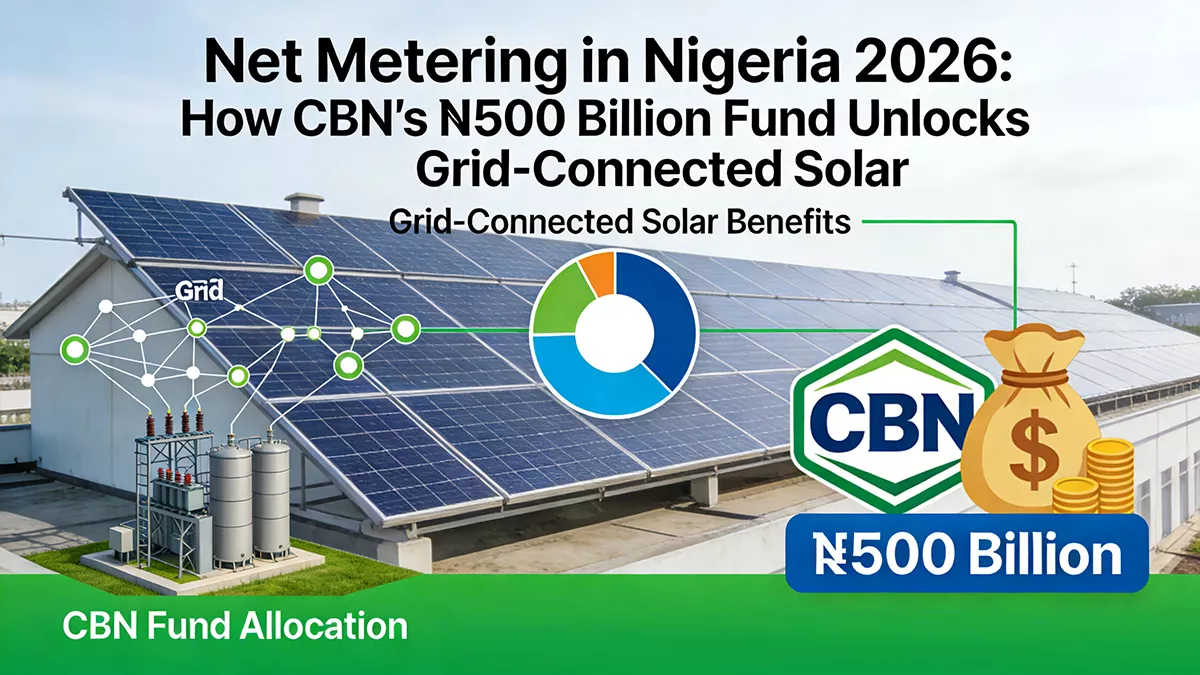
The $4.7 Billion Opportunity: Why Nigerian Businesses Are Suddenly Selling Electricity
Imagine running a factory that not only powers itself but actually earns money every time the sun shines. That's no longer science fiction in Nigeria—it's the new economic reality for businesses that understand the country's rapidly evolving net metering framework.
Here's a number that should grab your attention: Nigerian commercial and industrial (C&I) customers spent an estimated ₦4.7 trillion ($3.2 billion) on backup diesel generators in 2025 alone. That's money literally going up in smoke—funds that could have been invested in productive assets, employee wages, or business expansion.
Now consider this alternative: under Nigeria's enhanced net metering regulations effective 2026, a typical manufacturing plant with 1MW rooftop solar can generate ₦180-220 million in annual revenue by selling excess electricity back to the grid. That's not savings—that's active income from an asset that also eliminates your dependency on unreliable grid power.
The catalyst for this transformation? The Central Bank of Nigeria's (CBN) newly established ₦500 billion ($340 million) Distributed Energy Resources Fund, specifically designed to finance net-metered solar installations with unprecedented favorable terms.
Understanding Nigeria's Two-Track Net Metering System
Nigeria has implemented a dual-track approach to net metering, recognizing the diverse needs of different customer segments:
Track 1: Standard Net Metering (1kW - 1MW)
This applies to most commercial and larger residential installations:
- Export credit rate: ₦85-105 per kWh (70-85% of retail tariff)
- Monthly settlement: Credits roll over for 12 months
- Annual cash-out: Unused credits paid at 65% of retail rate
- Maximum export: Limited to 100% of monthly consumption
For a Lagos shopping mall consuming 150,000 kWh monthly and installing 800kW solar:
- Monthly export: 72,000 kWh (48% of generation)
- Annual export revenue: ₦73-90 million
- Grid dependency reduction: 52% immediate, 85% with batteries
Track 2: Premium Net Metering (>1MW - 10MW)
Designed for large industrial consumers:
- Export credit rate: ₦95-120 per kWh (75-95% of retail)
- Priority dispatch: Grid operator must accept power first
- Bilateral agreements: Direct PPA with distribution companies possible
- Capacity payments: Additional ₦15-25/kWh for reliable capacity provision
An Abuja industrial park with 5MW solar installation can expect:
- Annual export revenue: ₦450-600 million
- Capacity payments: ₦75-125 million additional
- Total benefit: 18-22% ROI before accounting for self-consumption savings
The CBN ₦500 Billion Fund: How to Access It
This is where the real opportunity lies. The CBN fund operates on three distinct financing models:
Model 1: Direct Project Financing (40% of fund)
- Loan amount: Up to 80% of project cost
- Interest rate: Fixed 7% for 10 years
- Grace period: 2 years principal only
- Collateral: Project assets as primary security
Model 2: Vendor Financing (35% of fund)
- Structure: Equipment suppliers receive upfront payment
- Customer terms: 0% down, 5-year payment plan at 9%
- Advantage: No capital expenditure required
- Best for: Cash-constrained businesses
Model 3: Performance-Based Grants (25% of fund)
- Amount: ₦10-50 million based on energy exported
- Payment: ₦2,000 per MWh exported in first 3 years
- Maximum: 30% of project cost
- Condition: Must achieve >60% capacity factor
Technical Requirements and Compliance
To qualify for net metering and CBN funding, installations must meet specific standards:
1. Metering Infrastructure
- Bi-directional meters: NERC-approved, Class 0.5 accuracy
- Communication: GSM/GPRS enabled for remote monitoring
- Data logging: 15-minute interval recording capability
- Certification: Must be installed by NERC-licensed technicians
2. Grid Integration Standards
- Power quality: THD < 5%, power factor 0.95-1.0
- Anti-islanding: Must detect grid loss within 2 seconds
- Frequency response: Must reduce output if grid frequency exceeds 50.5Hz
- Voltage regulation: Maintain voltage within ±5% of nominal
3. Safety Requirements
- DC isolation: Multiple disconnect points clearly marked
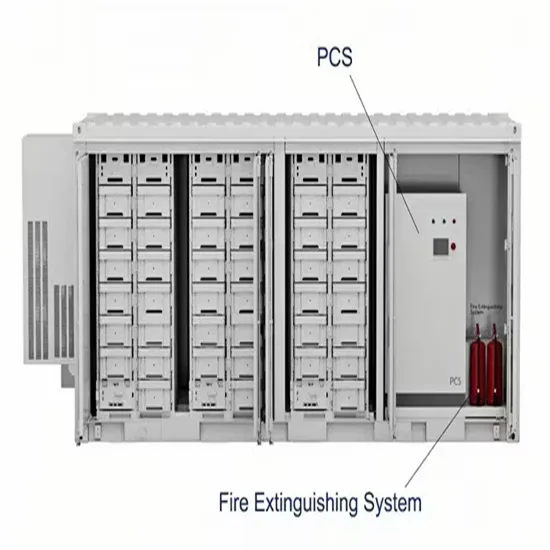
- Fire protection: UL-certified enclosures, proper ventilation
- Lightning protection: Surge arrestors at all entry points
- Emergency procedures: Clearly documented shutdown procedures
Real-World Economics: Case Studies from Across Nigeria
Case Study 1: Port Harcourt Oil Services Company
- System: 2.4MW rooftop solar, no storage
- Investment: ₦1.2 billion ($810,000)
- CBN financing: ₦960 million loan at 7%
- Annual performance:
- Self-consumption: 3.2 GWh (₦272 million savings) - Grid export: 1.1 GWh (₦93.5 million revenue) - Total benefit: ₦365.5 million
- Payback period: 3.8 years (including loan payments)
- Current status: Generating ₦30 million monthly net positive cash flow
Case Study 2: Ibadan Food Processing Plant
- System: 800kW solar + 1.6MWh battery storage
- Investment: ₦650 million ($440,000)
- CBN support: ₦195 million performance grant
- Operational benefits:
- Diesel consumption reduced by 92% - Production interruptions eliminated - Product quality improved (stable temperatures)
- Financial metrics:
- Annual savings: ₦280 million - Grant income: ₦65 million (first year) - Total ROI: 42% in year 1
Case Study 3: Kaduna Residential Estate (100 homes)
- Collective system: 500kW community solar
- Investment: ₦300 million ($203,000)
- Financing: CBN vendor financing through installer
- Resident economics:
- Monthly bill reduced from ₦25,000 to ₦8,500 - No upfront cost (financed over 5 years) - Property values increased 15-20%
- Grid benefits:
- Peak demand reduced by 400kW - Distribution infrastructure saved ₦80 million - Carbon offset: 420 tons annually
Common Implementation Challenges and Solutions
Challenge 1: Distribution Company (DisCo) Pushback
Problem: Some DisCos resist net metering due to revenue loss concerns Solution:
- Utilize NERC's mandatory interconnection rules
- Offer to install generation behind the meter (doesn't affect DisCo revenue)
- Propose revenue-sharing arrangement for excess generation
Challenge 2: Technical Capacity Constraints
Problem: Limited qualified installers and maintenance technicians Solution:
- Partner with international EPC firms with local joint ventures
- Invest in training programs with technical colleges
- Utilize remote monitoring and predictive maintenance
Challenge 3: Currency and Import Risks
Problem: Naira volatility affects equipment procurement Solution:
- Leverage CBN's special import window for renewable energy
- Consider local assembly partnerships for balance of system
- Use forward contracts for major equipment purchases
Strategic Implementation Timeline
For businesses planning net-metered solar installations:
Phase 1: Preparation (Months 1-2)
- Energy audit and load profiling
- Rooftop assessment and structural analysis
- Preliminary design and financial modeling
- NERC application submission
Phase 2: Financing (Months 2-3)
- CBN funding application
- Equipment procurement
- Contractor selection and contracting
- Insurance and risk mitigation
Phase 3: Implementation (Months 3-5)
- Installation and commissioning
- Meter installation and NERC certification
- Staff training and procedure development
- Performance baseline establishment
Phase 4: Optimization (Months 6-24)
- Load shifting implementation
- Battery storage integration (if phased)
- Expansion planning based on performance
- Grid services participation evaluation
The Future: Beyond Net Metering to Grid Services
Net metering is just the beginning. Nigeria's evolving electricity market presents additional revenue streams:
1. Frequency Regulation Services
- Payment: ₦8-12 per kWh for 30-minute response capability
- Requirement: Minimum 500kW, response within 10 seconds
- Potential: ₦40-80 million annual for 5MW system
2. Capacity Reserve Markets
- Structure: Payment for guaranteed availability
- Rate: ₦20-30 per kW-month
- Example: 2MW system earns ₦480-720 million annually
3. Carbon Credit Monetization
- Credits: Verified Carbon Standard (VCS) or Gold Standard
- Value: $5-15 per ton CO₂ avoided
- Potential: 5MW solar generates 6,500 tons credits = $65-97,500 annually
The Bottom Line: A Once-in-a-Generation Opportunity
The convergence of four factors creates unprecedented opportunity: 1. Policy certainty: NERC regulations guarantee 10-year net metering framework 2. Financing availability: CBN's ₦500 billion fund at below-market rates 3. Economic imperative: Rising diesel costs (₦350-450/L) vs falling solar LCOE (₦25-35/kWh) 4. Technical maturity: Proven solutions with 25-year performance warranties
The window for maximum benefit is now. As adoption increases:
- Export rates may be reduced (likely to 60-75% of retail by 2028)
- Grid interconnection fees may be introduced
- Funding terms may become less favorable
For Nigerian businesses, the calculation is simple: every month of delay represents lost revenue, unnecessary diesel expense, and missed competitive advantage.
The infrastructure exists. The regulations are clear. The financing is available. The only question is: will your business capture this opportunity, or will you watch as competitors transform energy costs into profit centers?

 Inquiry
 Online Chat