


Why Nigeria Just Made Solar + Storage the Most Profitable Investment in West Africa
Picture this: you're running a factory in Lagos, paying ₦350 per kWh for diesel-generated power, constantly dealing with blackouts that cost you ₦25 million in lost production every month. Your electricity bill eats up 40% of your operating costs, leaving little room for growth or innovation. This isn't a hypothetical scenario—it's the daily reality for thousands of Nigerian businesses struggling with one of the world's most unreliable power grids.
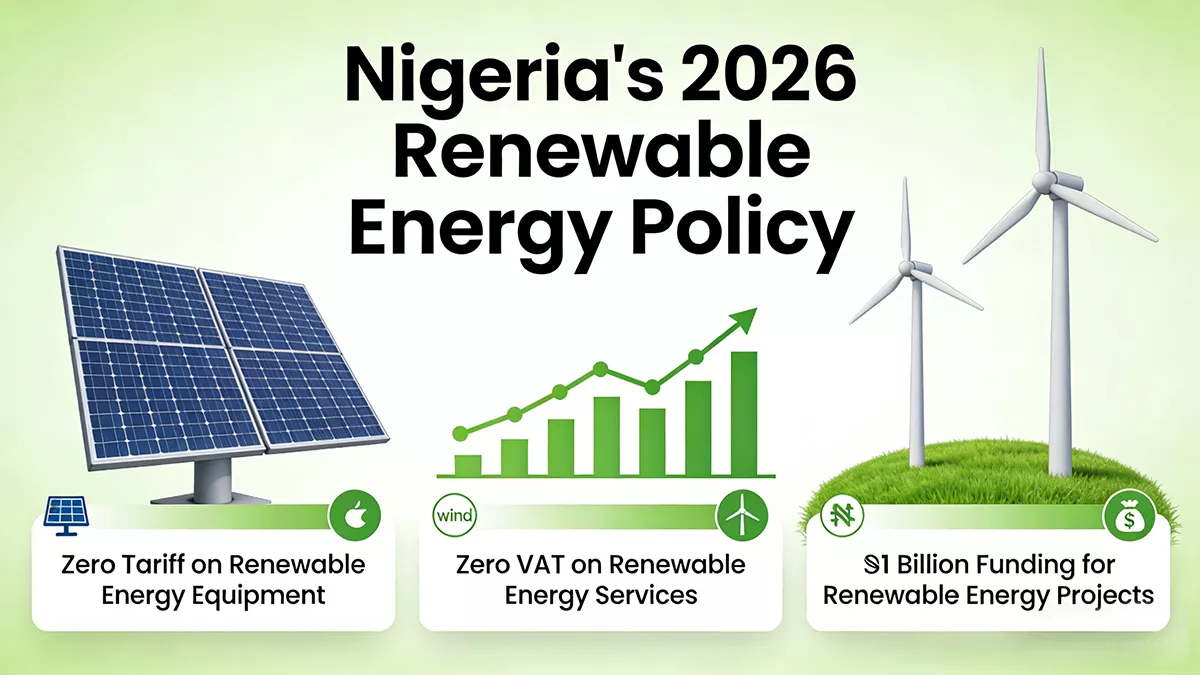
Now imagine a different reality: the Nigerian government has just announced a comprehensive policy package that makes solar-plus-storage installations not just viable, but exceptionally profitable. We're talking about zero import duties on solar panels and batteries, zero VAT on all renewable energy equipment, and access to ₦1 billion in direct funding for qualifying projects.
The numbers are staggering. Under the revised 2023 Electricity Act, Nigeria has committed to achieving 30% renewable energy penetration by 2030, up from just 5% in 2024. This isn't just political rhetoric—it's backed by concrete financial incentives that fundamentally change the economics of energy investments in Africa's largest economy.
Understanding Nigeria's Three-Tier Incentive Structure
Nigeria's renewable energy policy operates on three distinct levels, each designed to address specific market barriers and accelerate deployment:
1. Tariff Elimination (The Import Cost Slasher)
Effective January 2026, Nigeria has eliminated import duties on all core renewable energy equipment. Here's what that means for your bottom line:
- Solar panels (HS 8541.40): Previously 20% duty → Now 0%
- Battery systems (HS 8507.60): Previously 15% duty → Now 0%
- Inverters & controllers (HS 8504.40): Previously 10% duty → Now 0%
For a typical 500kW commercial installation, this translates to immediate savings of ₦45-60 million on equipment costs alone. The reduction is even more significant for lithium-ion batteries, where import duties previously added 35-45% to procurement costs.
2. VAT Exemption (The Operational Cost Killer)
In a move that surprised even industry analysts, Nigeria extended its VAT exemption on renewable energy equipment through 2030. This means:
- No 7.5% VAT on solar panels, batteries, inverters, mounting systems
- No VAT on installation services for grid-connected systems
- No VAT on maintenance contracts for the first 5 years
For a medium-sized manufacturing plant investing ₦300 million in solar-plus-storage, the VAT exemption represents an additional ₦22.5 million savings upfront.
3. Funding Access (The Capital Enabler)
The real game-changer comes from Nigeria's newly established Renewable Energy Development Fund (REDF), managed by the Central Bank of Nigeria (CBN). Key features include:
- Direct grants: Up to 30% of project cost (capped at ₦500 million)
- Soft loans: 5% interest rate for 10-year terms
- Guarantees: CBN-backed payment security for PPA agreements
To put this in perspective: a ₦1.5 billion solar farm that previously had a 7-year payback period now achieves ROI in just 3.8 years when factoring in grant support and tax benefits.
Who Qualifies and How to Apply
The application process has been dramatically streamlined compared to previous Nigerian bureaucratic procedures. Here's what you need to know:
Eligibility Criteria
1. Project size: Minimum 100kW for commercial projects, 10kW for residential 2. Equipment standards: Must meet SON (Standards Organization of Nigeria) certification 3. Local content: At least 30% of project value must be Nigerian-sourced labor/services 4. Technical viability: NERC-approved design and engineering plans
Required Documentation
- Company registration certificate (CAC)
- Tax clearance certificate for past 3 years
- Bank statements showing financial capacity
- Detailed technical proposal including equipment specifications
- Environmental Impact Assessment (EIA) for projects >1MW
- NERC licensing application form (for grid-connected systems)
Application Timeline
The current processing time is 45 working days from complete submission to funding disbursement. The CBN has committed to reducing this to 30 days by Q3 2026.
Real-World Impact: Case Studies from Early Adopters
Let's look at three businesses that have already capitalized on these policies:
Case 1: Lagos Textile Manufacturer
- Before: ₦480 million annual diesel costs, 8 hours daily power outage
- Investment: ₦850 million in 4MW solar + 8MWh battery storage
- Policy benefits: ₦255 million equipment cost reduction (30% duty+vat savings), ₦255 million REDF grant
- Result: ₦420 million annual savings, 2.1-year payback period, 100% grid independence during business hours
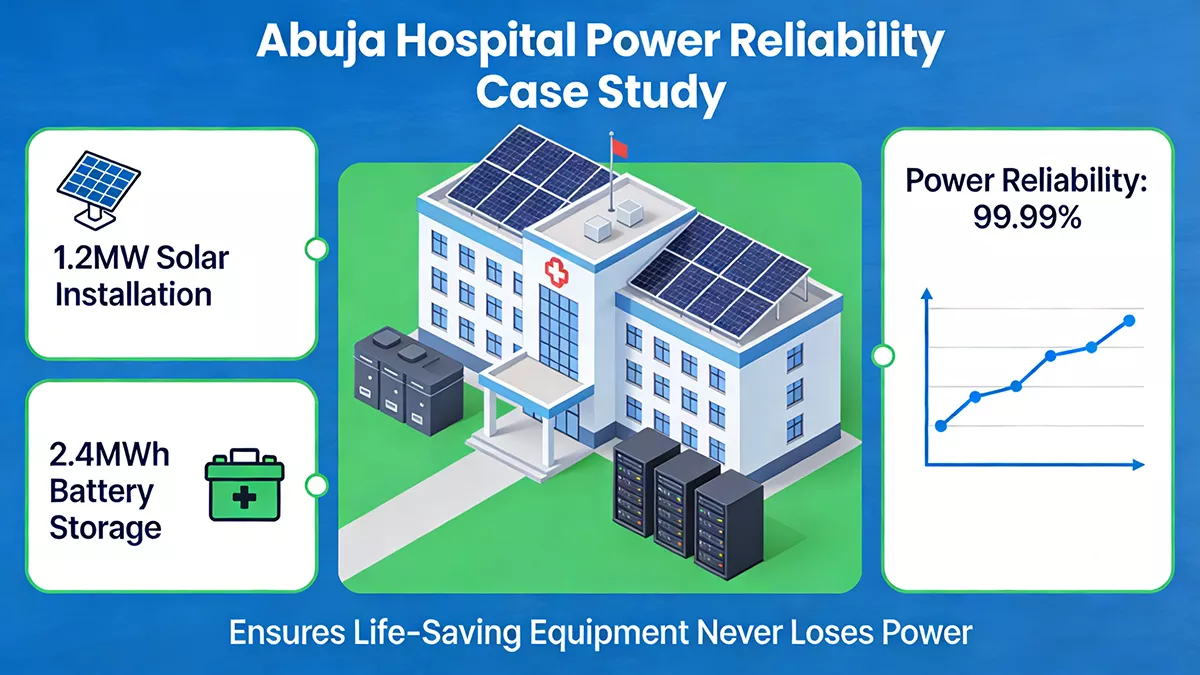
Case 2: Abuja Hotel Chain
- Before: ₦180 million annual electricity bills, frequent guest complaints
- Investment: ₦320 million in 1.2MW solar + 2.4MWh batteries
- Policy benefits: ₦96 million tax savings, ₦96 million soft loan at 5%
- Result: 80% reduction in grid dependency, enhanced brand reputation as "green hotel"
Case 3: Kano Agricultural Processing Plant
- Before: Completely off-grid, reliant on expensive diesel generators
- Investment: ₦120 million in 400kW solar + 800kWh storage
- Policy benefits: ₦36 million import duty exemption, ₦36 million grant
- Result: Production costs reduced by 35%, ability to operate 24/7 during harvest season
Common Misconceptions and Pitfalls to Avoid
Despite the clear benefits, many Nigerian businesses make these critical mistakes:
Myth 1: "The application process is too complex."
- Reality: The NERC has deployed dedicated application officers in all 36 states. Online submission portals process 85% of applications automatically.
Myth 2: "I need to wait for better technology."
- Reality: Current solar panel efficiency (22-24%) already provides excellent returns. Waiting costs you ₦15-20 million in annual savings for every 1MW of deferred installation.
Myth 3: "My business location isn't suitable."
- Reality: Nigeria receives 4.5-6.5 kWh/m²/day of solar radiation nationwide—among the highest in the world. Even northern states (Sokoto, Kano) achieve 6.2 kWh/m²/day.
Critical Pitfall: Underestimating maintenance costs While equipment is duty-free, proper maintenance requires budgeting 1-2% of installation cost annually. Failure to maintain battery systems (particularly lithium-ion) can reduce lifespan by 40-60%.
Strategic Recommendations for 2026 Implementation
Based on analysis of successful projects, here are actionable recommendations:
1. Phase your investment - Start with solar-only to establish ROI baseline - Add storage in year 2 when operational savings fund expansion - Consider time-of-use optimization in year 3
2. Leverage multiple incentives - Combine REDF grants with accelerated depreciation (95% first year) - Utilize NERC's net metering framework for excess energy sales - Access state-level supplements (Lagos offers additional 10% rebate)
3. Partner strategically - Work with NERC-certified installers for streamlined approvals - Engage local banks with CBN-approved green financing programs - Consider EPC contractors with proven Nigerian project experience
The Bottom Line: Is This Too Good to Last?
History shows that transformative energy policies often have limited windows of opportunity. Nigeria's current incentive structure is projected to remain in place through 2028, after which tariffs may gradually reintroduce at reduced rates (5-10% instead of 15-20%).
The economic imperative is clear: Nigeria loses an estimated $29 billion annually to power outages and unreliable electricity. The government's ₦1 trillion investment in renewable energy incentives represents not just environmental commitment, but economic survival strategy.
For businesses operating in Nigeria, the choice isn't whether to invest in solar-plus-storage, but how quickly to move. Every month of delay represents lost savings, missed productivity gains, and foregone competitive advantage.
The policy framework exists. The funding is available. The technology is proven. The only remaining question is: will your business be among the winners of Nigeria's renewable energy revolution, or will you watch from the sidelines as competitors gain unbeatable cost advantages?



 Inquiry
 Online Chat