


Poland Home Battery Storage Subsidy 2026: Complete Guide to Mój PrÄ d 6.0 Benefits Discover Poland's 2026 home battery storage subsidy under Mój PrÄ d 6.0. Learn about PLN 7,000 grants, eligibility requirements, and how to maximize your solar investment.
Why Polish Homeowners Suddenly Need Battery Storage
Imagine watching your electricity bills climb another 15% this winter while your rooftop solar panels export cheap energy to the grid for almost nothing. That's the reality facing hundreds of thousands of Polish households after the country switched from net metering to net billing in April 2022. The numbers tell a stark story. Under the old net metering system, Polish homeowners could receive approximately 0.8 kWh credit for every kWh they exportedâa roughly 80% retail price return. Today, under net billing, that same exported electricity fetches just 0.05-0.07 EUR per kWh after transmission fees are deducted. The economics have fundamentally shifted. Here's the uncomfortable truth most installers won't tell you upfront: without battery storage, your solar installation in Poland is essentially working against you during peak production hours. You're generating power when prices are lowest (midday) and exporting it to a grid that pays you pocket change. Meanwhile, you buy electricity back in the evening when rates hit their highest point. The Polish government recognizes this problem. Their Mój PrÄ d 6.0 program, administered through the National Fund for Environmental Protection and Water Management (NFOÅiGW), has allocated PLN 1.85 billion specifically to address this imbalance. The subsidies aren't just for solar anymoreâthey're heavily weighted toward battery storage integration.Understanding the Mój PrÄ d 6.0 Subsidy Structure
The sixth iteration of Poland's flagship residential energy program represents a significant policy evolution. Previous rounds focused primarily on solar panel installation, but Mój PrÄ d 6.0 makes energy storage the star of the show. The subsidy tiers reflect the government's strategic priorities:- Solar-only systems (â¥2 kWp): 3,000 PLN (~700 EUR)
- Solar + battery storage (â¥2 kWp + â¥2 kWh): 7,000 PLN (~1,600 EUR)
- Solar + battery + energy management system: 7,500 PLN (~1,750 EUR)
- Solar + heat pump combination: 5,000 PLN (~1,150 EUR)
Eligibility Requirements for 2026 Applicants
The application process isn't complicated, but you need to understand the prerequisites before investing. First, you must be a registered prosumerâessentially a household with a grid-connected solar installation that generates electricity and sells excess back to the grid. You need an active agreement with your energy supplier establishing your prosumer status. This isn't something you can do after installation; the prosumer registration must be in place before you submit your subsidy application. The property must be a single-family residential building. Apartment dwellers, unfortunately, can't access Mój PrÄ d benefits directly, though some regional programs might offer alternatives. The government has prioritized standalone houses because they typically have more suitable roof space and can benefit more substantially from storage integration. Timing matters critically. Your installation must be completed and operational AFTER the current program phase begins. If you installed your system before Mój PrÄ d 6.0 launched, you can't retroactively claim these subsidies. This sounds obvious, but plenty of eager homeowners have missed out by submitting applications for pre-existing systems. Documentation requirements include installation invoices, your prosumer agreement, grid connection confirmation, and system commissioning certificates. The approval process typically takes 30-60 working days after submission, and the funds transfer directly to your bank accountâno vouchers or installer intermediaries.The Net Billing Reality Check
Why does the Polish government suddenly care so much about home batteries? The answer lies in understanding what net billing actually means for your household finances. Under net billing, the value of your exported electricity is calculated based on day-ahead market prices minus approximately 20% for transmission and distribution costs. During Poland's sunny summer months, when solar production peaks, wholesale electricity prices often drop to near-zero or even negative levels during midday hours. Your exported electrons might be worth almost nothing. Meanwhile, Polish household electricity prices have been rising steadily. The average residential tariff now exceeds 0.80 PLN per kWh, with evening peaks pushing toward 1.00 PLN. The spread between what you earn exporting and what you pay to import has never been wider. This is where battery storage transforms the economics. A properly sized home battery system allows you to shift consumption patterns rather than just generating and exporting. Instead of importing expensive electricity during 5-9 PM peak hours, you discharge your stored solar generation. Instead of exporting worthless midday production, you save it for when it commands premium prices. The math becomes compelling even without subsidies. With realistic Polish electricity prices and a well-optimized self-consumption strategy, a 10 kWh battery system can save a typical household between 2,000-3,000 PLN annually. Add the 7,000 PLN Mój PrÄ d subsidy, and your payback period shrinks dramatically.Sizing Your Battery System Correctly
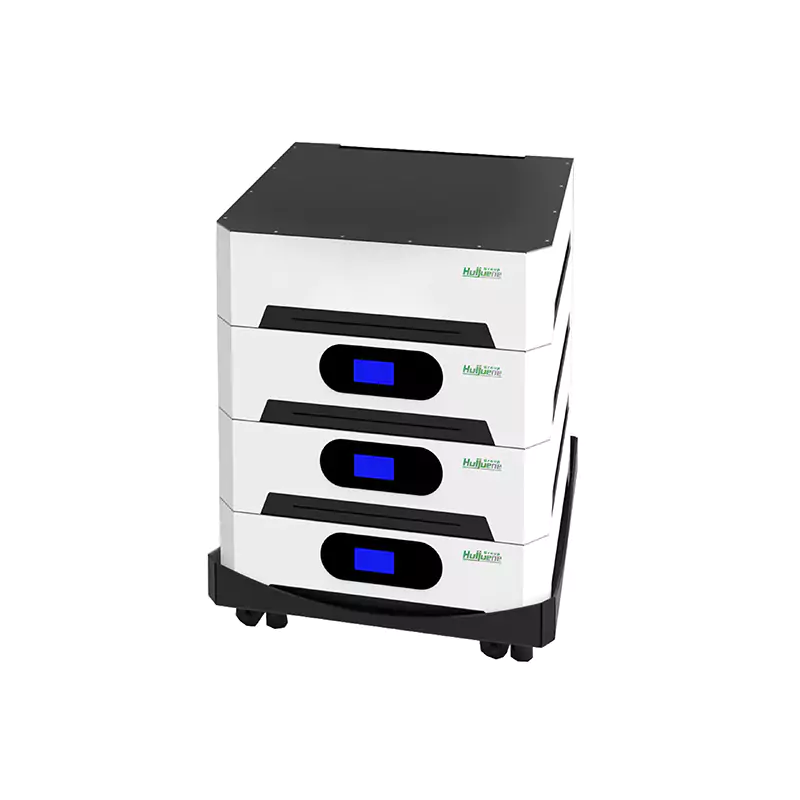
One of the most common mistakes Polish homeowners make is installing an undersized battery. Bigger isn't always better, but too small definitely hurts your economics. Consider your actual consumption patterns. A family of four with typical evening peaks might use 15-20 kWh of electricity between 4 PM and 10 PM. If your solar production covers 30-40% of daily consumption, you'd need roughly 6-8 kWh of usable battery capacity to meaningfully shift your load profile. Going smaller means you'll still import substantial grid power during peak hours. However, battery sizing shouldn't ignore your solar production volume. A 15 kWh battery paired with a 4 kWp solar system means you'll frequently have excess capacity that can't be stored. The optimal configuration balances your generation profile with your consumption patterns and your budget constraints. Polish winters complicate calculations significantly. Shorter days and lower solar angles mean winter production might be just 20-30% of summer output. Your battery needs to carry you through longer evening periods when it can't recharge during daylight hours. Most installers recommend starting with at least 5 kWh of usable capacity and scaling up based on specific household consumption data. If your annual consumption exceeds 4,000 kWh and you're home during evenings, consider systems in the 7-10 kWh range.Application Walkthrough: Step-by-Step Process
Getting your Mój PrÄ d subsidy isn't complicated, but skipping steps will get your application rejected. The process starts with installation, but you need to prepare before signing any contracts. Verify your property qualifiesâsingle-family home, no existing prosumer registration for this address, suitable roof structure for your planned solar capacity. Consult with at least two installers to compare equipment options and installation quotes. Once your system is installed and commissioned, contact your energy supplier to establish your prosumer agreement. This registration process typically takes 2-4 weeks. Don't schedule your Mój PrÄ d application until this prosumer status is officially confirmedâyou'll need the documentation. Access the application portal at mojeporady.gov.pl/program/moj-prad. The online system guides you through required fields and document uploads. Prepare digital copies of all invoices, certificates, and agreements in advance to avoid last-minute scrambling. The review process takes 30-60 working days, which means 6-12 weeks in real-world terms. Budget your cash flow accordingly. The subsidy won't arrive before you've paid your installer in full. Budget warnings apply: Mój PrÄ d funds are finite and distributed on a first-come basis. While the current round has substantial resources, waiting too long risks missing out if demand exhausts available funds.Calculating Your True Return on Investment
Let's walk through realistic numbers for a Polish homeowner considering the solar-plus-storage path. A typical 6 kWp solar installation with 7 kWh battery system might cost 45,000-55,000 PLN installed, after installer margins and permitting fees. The Mój PrÄ d 6.0 subsidy contributes 7,000 PLN, reducing your net investment to approximately 40,000-48,000 PLN. Without battery storage, your annual savings from solar self-consumption might reach 3,000-4,000 PLN, depending on your usage patterns and electricity tariff. Add the battery and smart management, and that figure climbs to 5,000-7,000 PLN annually. The differenceâroughly 2,000-3,000 PLN per yearârepresents the battery's contribution. Your payback period becomes approximately 15-20 years without subsidies, shrinking to 8-12 years with the Mój PrÄ d benefit. Those numbers might seem long, but consider that battery systems typically carry 10-year warranties, and Polish electricity prices show no signs of decreasing. Several factors can improve these numbers. Time-of-use tariffs from certain Polish suppliers offer better value for battery-equipped homes. Load shifting to take advantage of lower nighttime rates while storing midday solar production creates additional savings opportunities. The environmental angle matters too, though it doesn't pay your bills directly. A well-optimized solar-plus-storage system can offset 70-80% of a typical household's electricity consumption, reducing your carbon footprint significantly.Common Mistakes to Avoid
Polish homeowners consistently make several errors that either reduce their subsidies or harm their system performance. Some install systems that exceed their actual consumption. Larger installations generate more power but often result in export to the grid at unfavorable rates. The economics favor right-sized systems that maximize self-consumption rather than overall production. Others rush into contracts without comparing installers thoroughly. Battery chemistry matters significantlyâLithium Iron Phosphate (LFP) batteries offer superior cycle life and safety compared to older NMC technology, despite higher upfront costs. Installer expertise in system integration and commissioning affects performance for years. A surprising number of applicants submit incomplete documentation. Every invoice, certificate, and agreement must be uploaded in the specified format. Missing or illegible documents extend approval timelines or cause rejections. Finally, some homeowners focus exclusively on the subsidy and ignore long-term system quality. The Mój PrÄ d benefit is a one-time payment, but your battery system will operate for 10-15 years. Choosing marginal equipment to maximize immediate subsidies rarely works out well.The Bigger Picture: Poland's Energy Transformation
Individual household decisions aggregate into national trends. Poland has emerged as Europe's fastest-growing solar market, with cumulative installed capacity exceeding 17 GW by late 2025. The country added more than 4 GW of new solar capacity in 2024 alone. This rapid growth creates both opportunities and challenges. Grid infrastructure wasn't designed for millions of decentralized generation sources feeding power back during midday peaks. Energy storageâdistributed across households like yoursâhelps balance these flows and reduces pressure on transmission infrastructure. The Mój PrÄ d program's evolution reflects learning from earlier deployments. First-generation subsidized installations in Poland often lacked storage, creating grid management headaches during sunny afternoons. The current emphasis on battery integration represents a course correction toward more sustainable distributed energy resources. Your decision to add battery storage contributes to this larger transformation. Every household that stores its solar generation rather than exporting it helps stabilize the broader electrical grid. The subsidies aren't just personal benefitsâthey're investments in Poland's energy infrastructure.Making Your Decision
The Mój PrÄ d 6.0 program offers genuine value for Polish homeowners willing to invest in integrated solar-plus-storage solutions. The 7,000 PLN battery subsidy meaningfully improves project economics, and the broader policy direction clearly favors self-consumption over net export. Consider your specific situation: roof orientation, consumption patterns, household schedule, and budget constraints all influence whether the investment makes sense for you. The calculations aren't identical for everyone. If you're already generating solar without storage, the incremental cost of adding battery capability might pencil out faster than you expect. If you're planning a new installation, designing it with storage integration from the start typically costs less than retrofitting later. Poland's energy transition is accelerating. The question isn't whether households will adaptâit's whether you'll benefit from the changes or simply watch your electricity bills rise while neighbors with storage systems optimize their consumption patterns. Take action now rather than later. The current subsidy round has substantial funding, but it won't last forever. As more Polish households recognize the economics of battery storage, demand will eventually outpace government resources. Your move.

 Inquiry
 Online Chat